University of Colorado
Anschutz Medical Campus

Heurista’s work at the University of Colorado Anschutz Medical Campus began with program assessment, consultation and design for comprehensive recognition standards to guide naming opportunities. All health sciences education had recently moved from the historic Denver campus to Aurora and there was debate about the naming of physical spaces on a campus that was likely to experience substantial growth and change in the near term. The work resulted in improved processes for valuing and formalizing naming opportunities with a concentration on named funds, programs and faculty positions instead of traditional facility-based naming recognition. A detailed design guide was prepared, reviewed by many stakeholders, and approved by the University Design Review Board.
Implementation has been a shared effort between the Advancement team, campus planning, local fabricators, and Heurista. The initial planning and design effort served as the foundation for recognition outcomes that have grown into one of the largest donor recognition programs in the United States. Each of the three primary recognition displays houses hundreds of recognition plaques and has been expanded at least once in the decade since Heurista was initially engaged. Naming of physical spaces, a hotly debated topic when the consultation began, has been limited to the very highest levels of giving.
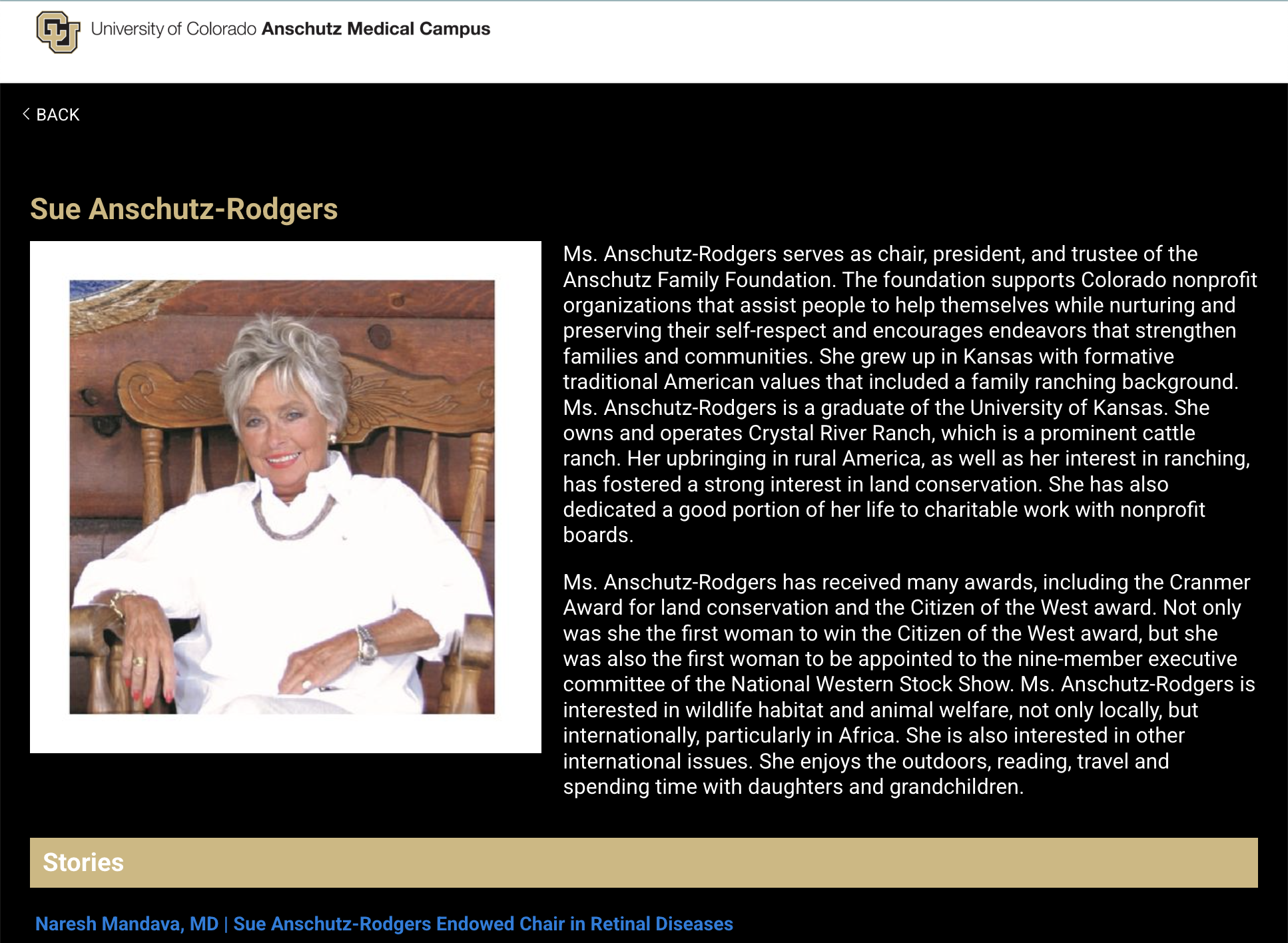
Notably, a digital archive of benefactor recognition, publicly available online, has been implemented to showcase the breadth and depth of benefactor recognition on the CU Anschutz Medical Campus.
Outcomes
-
Under the direction of the campus architect, Heurista was selected to provide consultation and design for comprehensive recognition standards to guide naming opportunities and forecast plans for cumulative and planned giving for the CUAnschutz campus. This work involved a detailed audit of all university facilities, tours of the two hospitals that share the campus, visits to other local institutions and a survey of peer organizations across the country. The consultation resulted in improved processes for valuing and formalizing naming opportunities and a detailed design guide including standards for destination graphics for individual naming opportunities, grouped units for recognizing non-facility based namings, exterior sign solutions and detailed workflows for developing content.
-
Throughout Heurista’s decade long engagement, there have been instances for review and comment on standing policies and drafting of multiple procedures to expedite donor recognition and other donor relations tasks. Heurista has been consulted during the growth of the central donor relations team from one person to a team of six; the application of standards by various units; and staged capacity growth in the donor recognition strategy.
All donor recognition products are fabricated and installed by local suppliers and recognition content development, including graphic design and layout, has moved over time to the CUAnschutz team. Heurista remains involved in a consultative fashion, assisting in major projects and advances in program strategy.
-
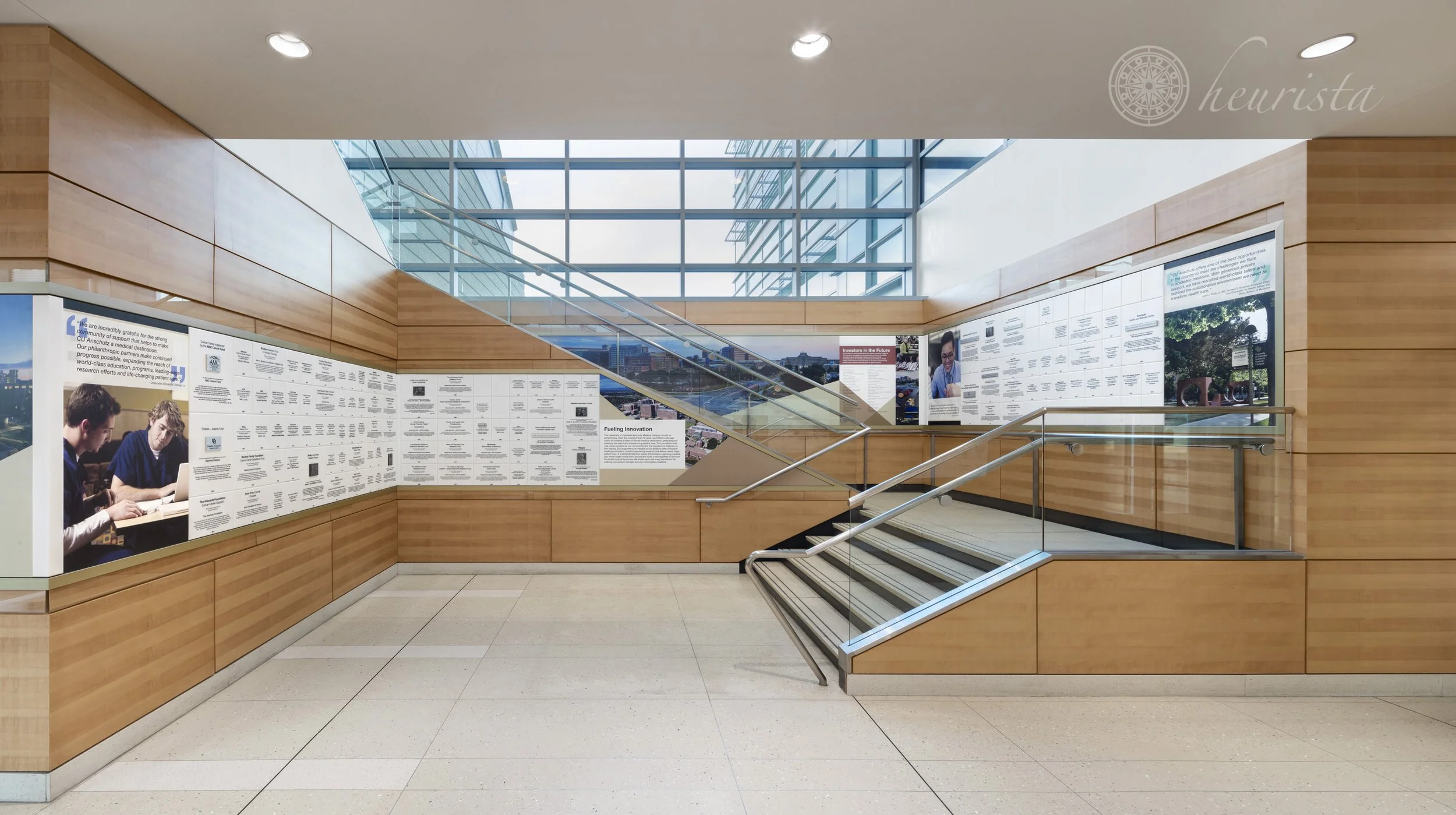
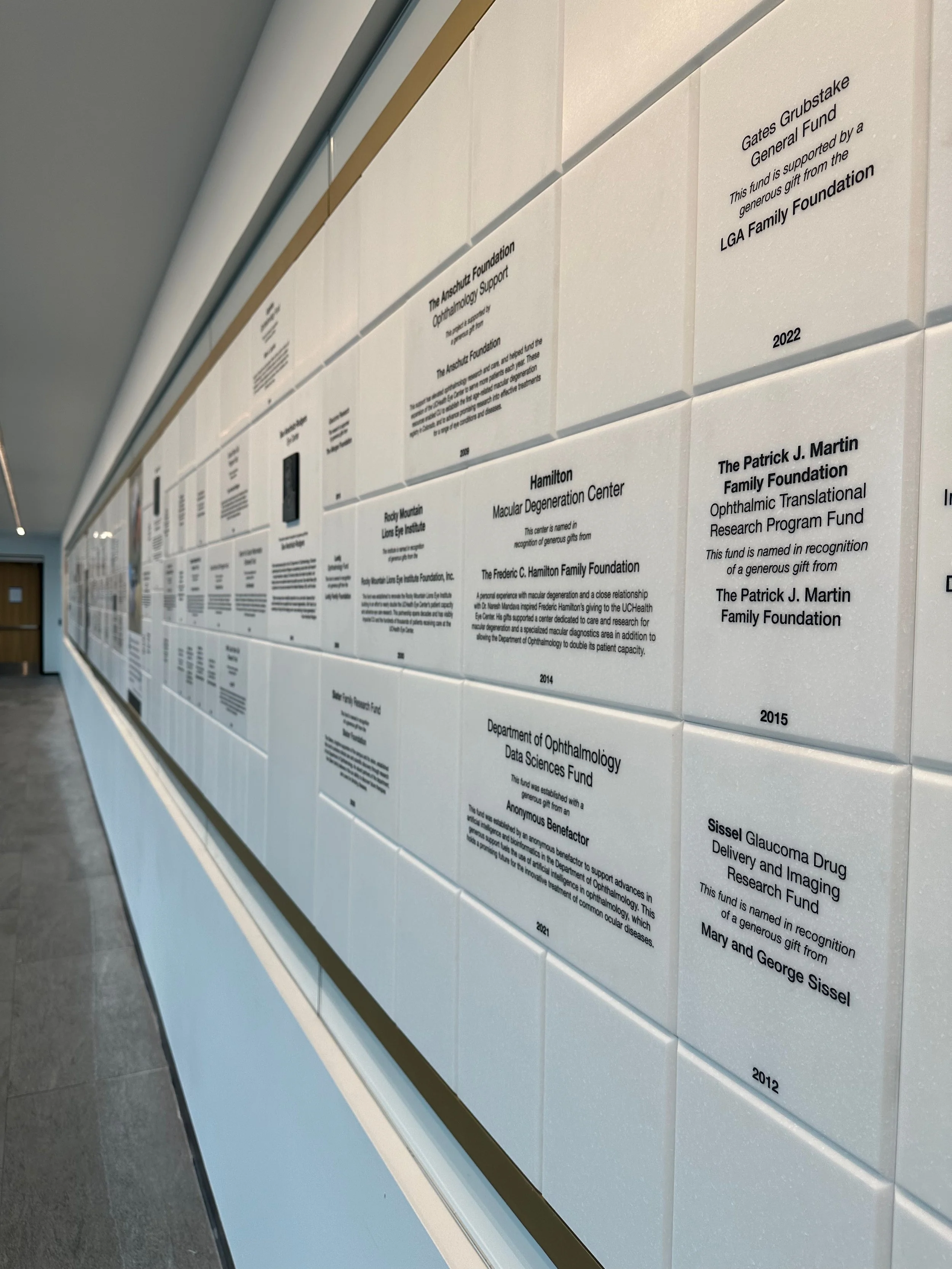
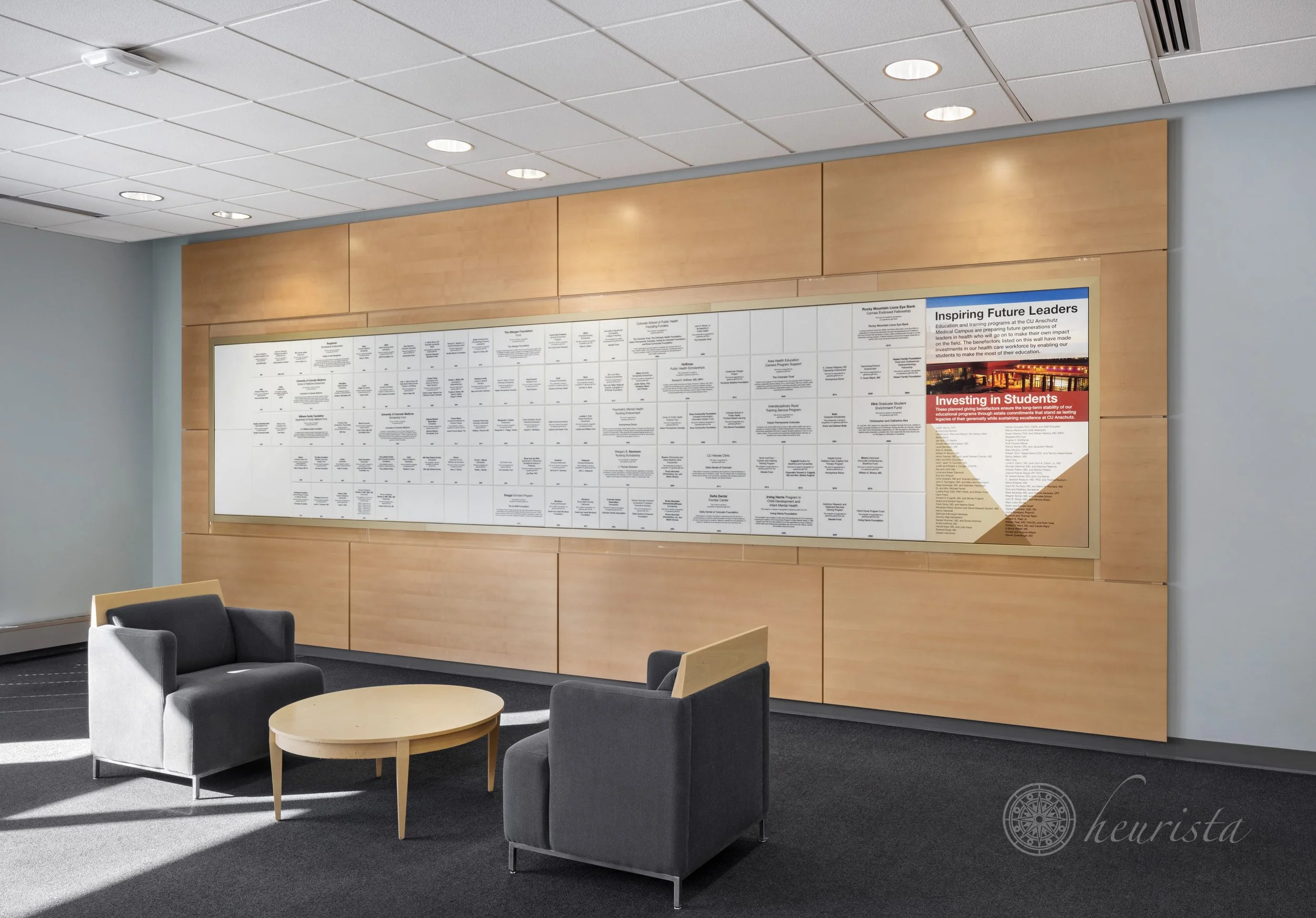
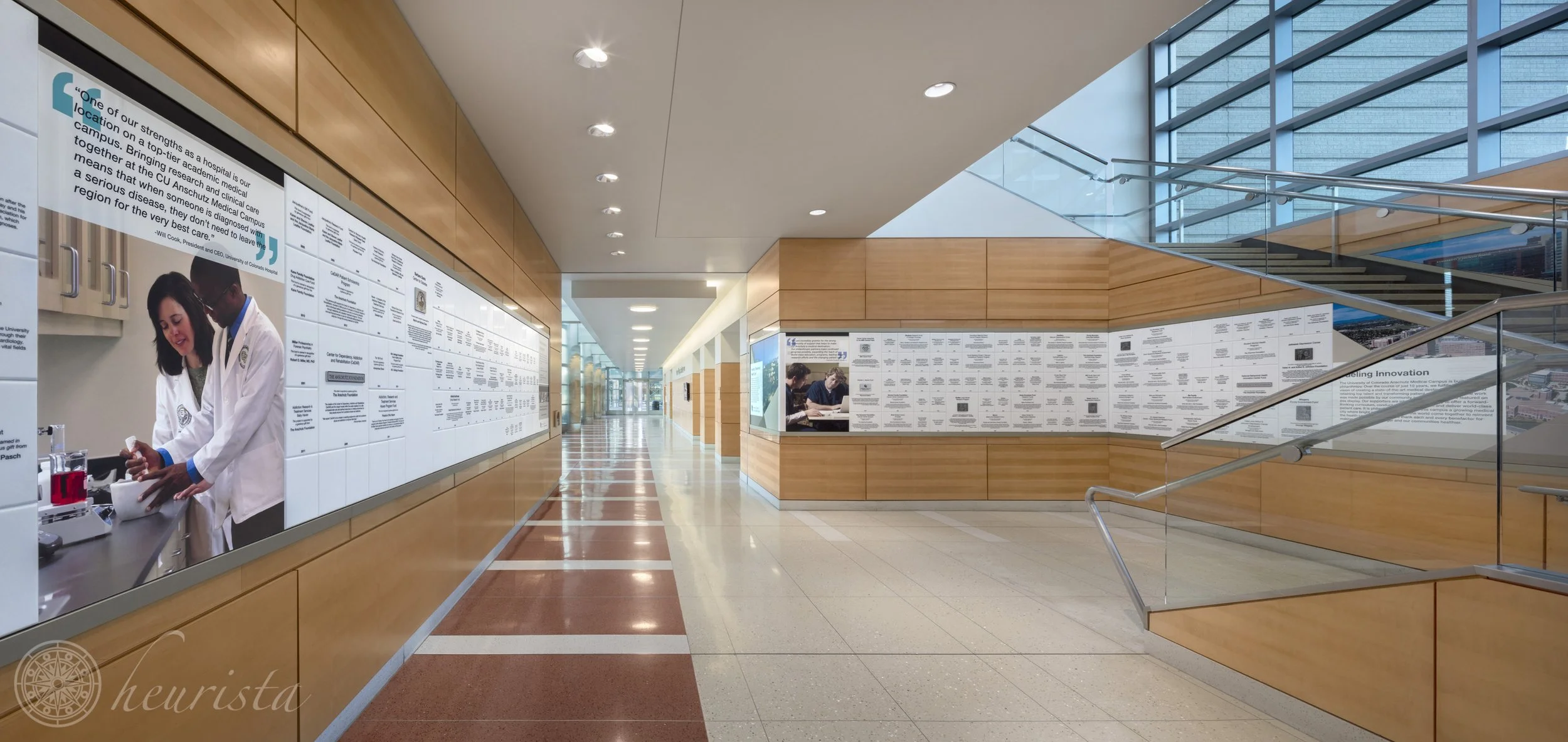
CU Anschutz recognize major giving in three primary categories: Education, Research and Endowed Chairs. Benefactors are offered named funds which are recognized through a hierarchy of plaques reflecting gift size. These plaques are grouped by the area of support. Because new plaques are added to the displays annually, the entire system allows for rearrangement and expansion. Each of the three displays has been expanded at least once in the 10 years they have been in use.
The plaques are also cataloged in the online archive, cuanschutzrecognition.org, where the exactly position of the plaque can be identified. -
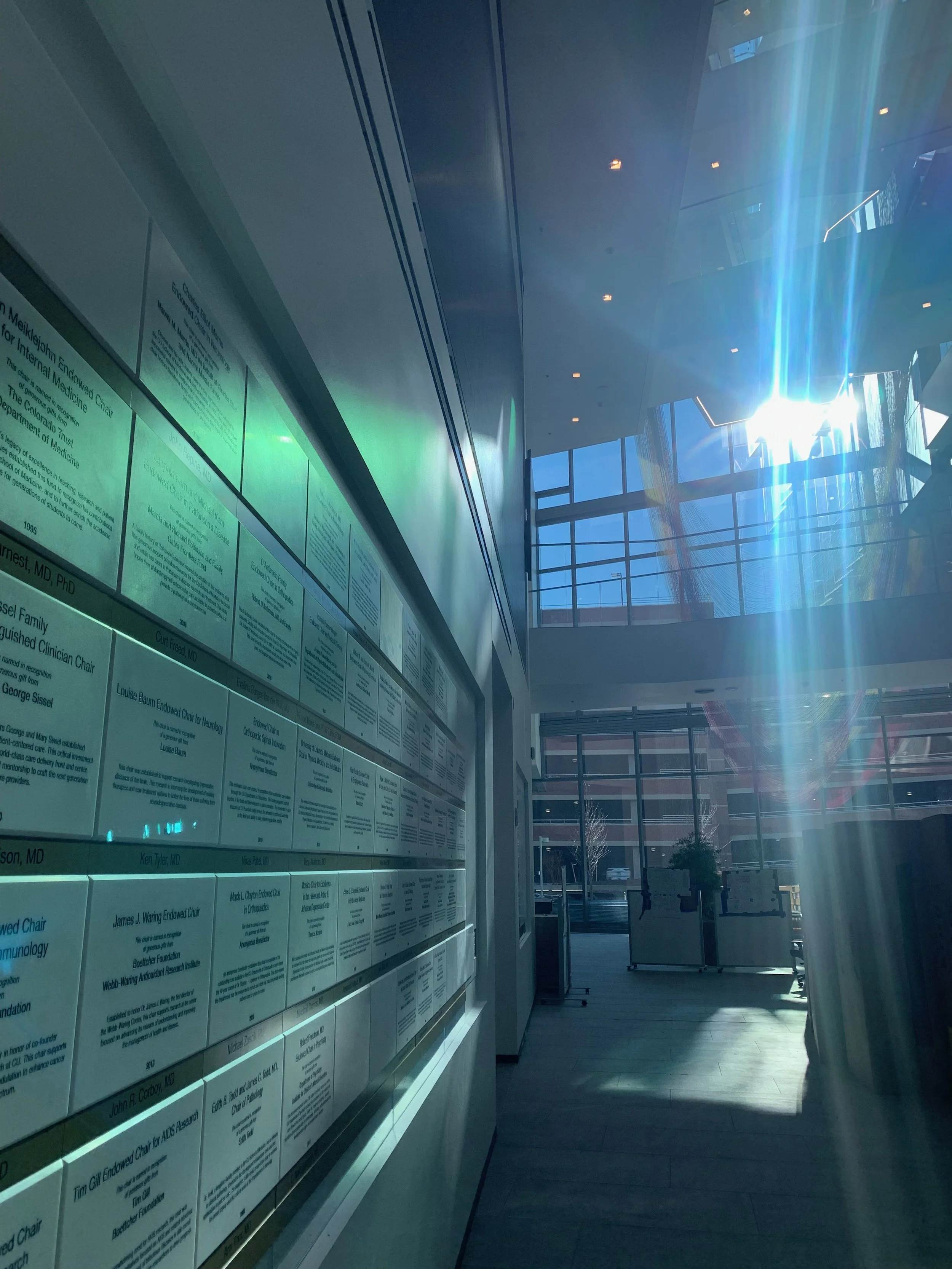
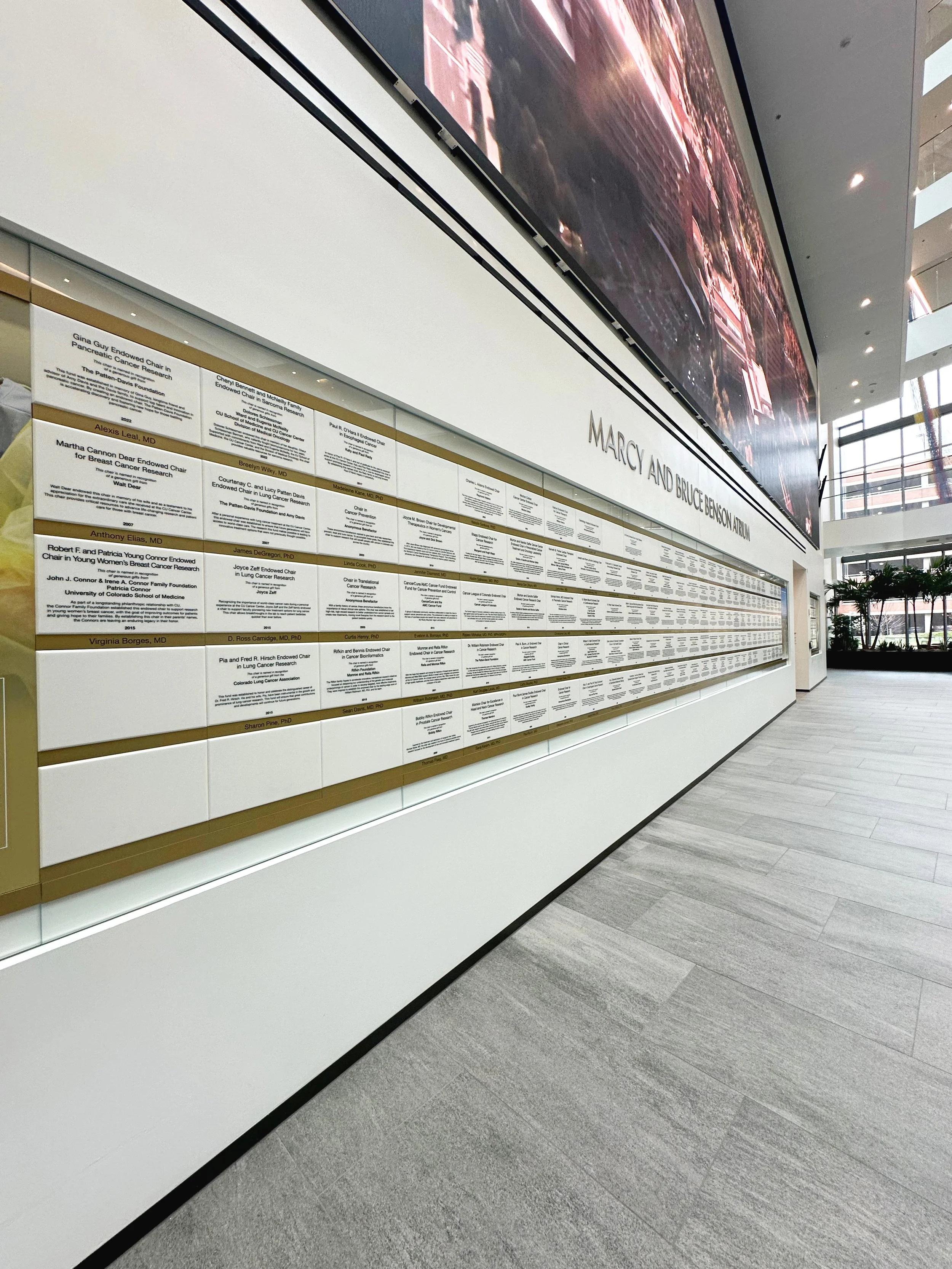
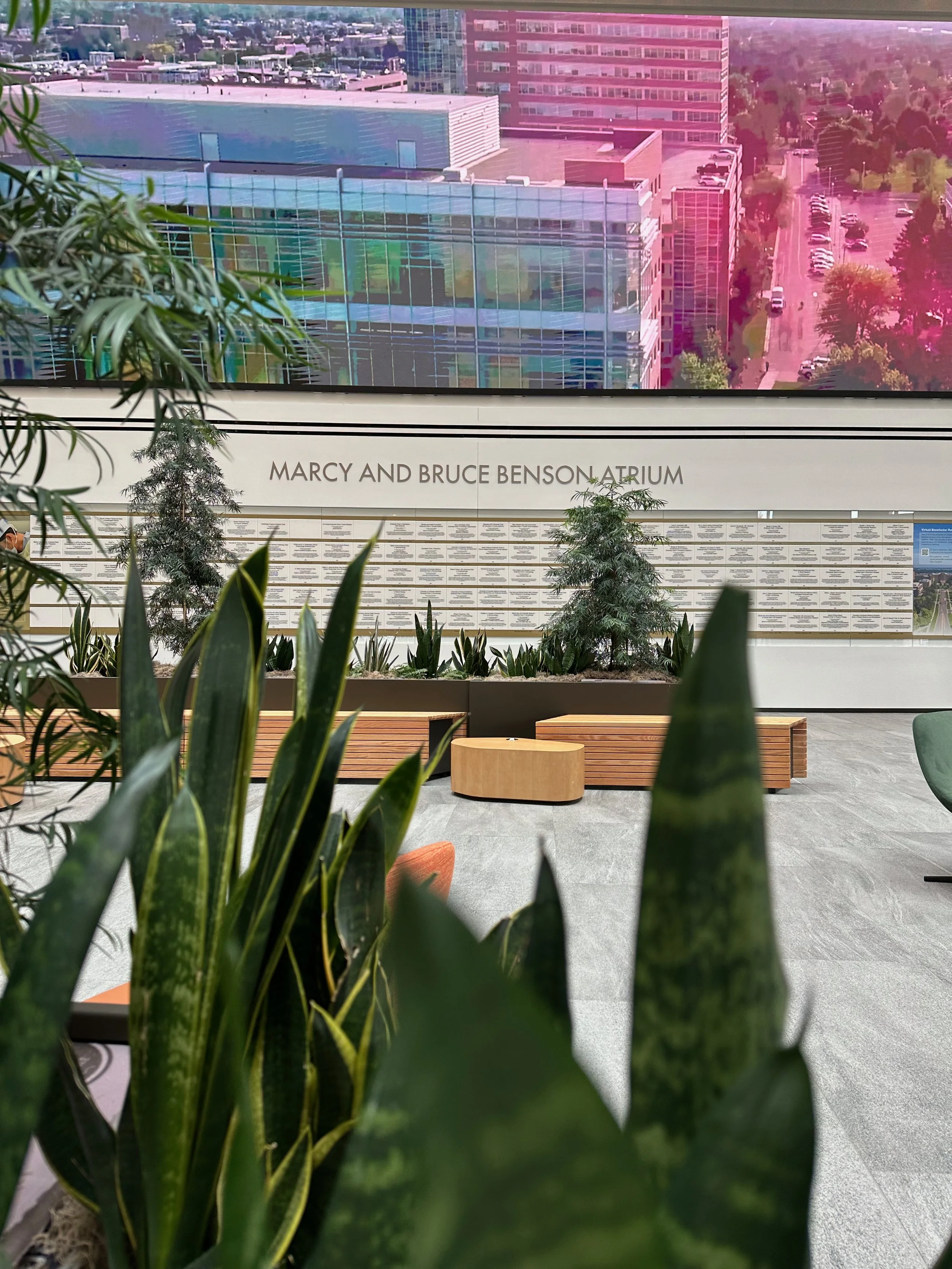
Endowed faculty chairs are named through funding of $2million or more. CU Anchutz has over 200 hundred named chairs and that roster is growing by almost ten percent per year. This display is approximately 5’ tall and 60’ wide; expansion of the display is expected in the very near future.
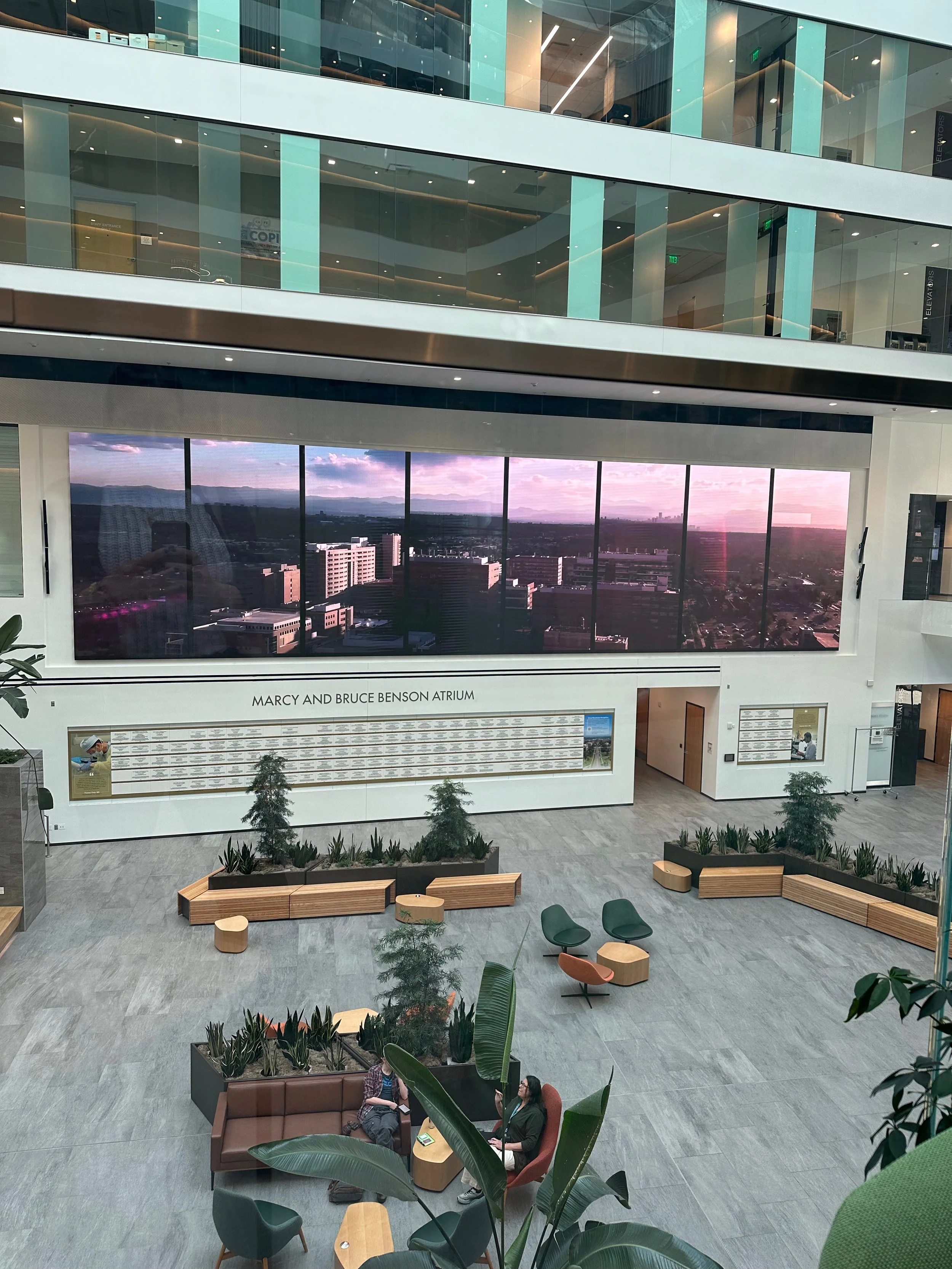
Recognition of endowed chairs is showcased in the Anschutz Health Sciences Building, a distinctive, multipurpose facility located at the crossroads of the academic, research and patient care districts of campus. All plaques are the same size and each is accompanied by a separate nameplate listing the faculty member currently holding that chair. the plaques are grouped by area of support and can be rearranged as needed to introduce new recognition.The digital recognition archive, cuanschutzrecognition.org, profiles each donor, maps the location of the plaques, and contains a story about the current and past holders of the endowed chair position.
-
At the time Heurista was first contracted, there was extreme resistance toward the naming of campus facilities. This concern stemmed from the recent relocation of all health sciences units, resulting in the decommissioning of hundreds of naming opportunities on the historic campus. Knowing that growth and change were inevitable in the early years, Heurista was asked to find alternative recognition strategies that would minimize the number of faciilty-based naming opportunities on the CU Anschutz campus.
The approach taken was two-fold. First, under the leadership of a new vice president of advancement, fundraising focused on named funds, programs and faculty positions. Secondly, with the agreement of the advancement team and campus leadership, the entry level for facility-based namings was set at ten figures or more (with limited exceptions) and required additional philanthropic service to the organization. Given the high value of facilities associated with this level of philanthropy, it is understood that only significant “destinations” will be named. Therefore, CU Anschutz refers to this type of recognition as “destination graphics,” not area naming.
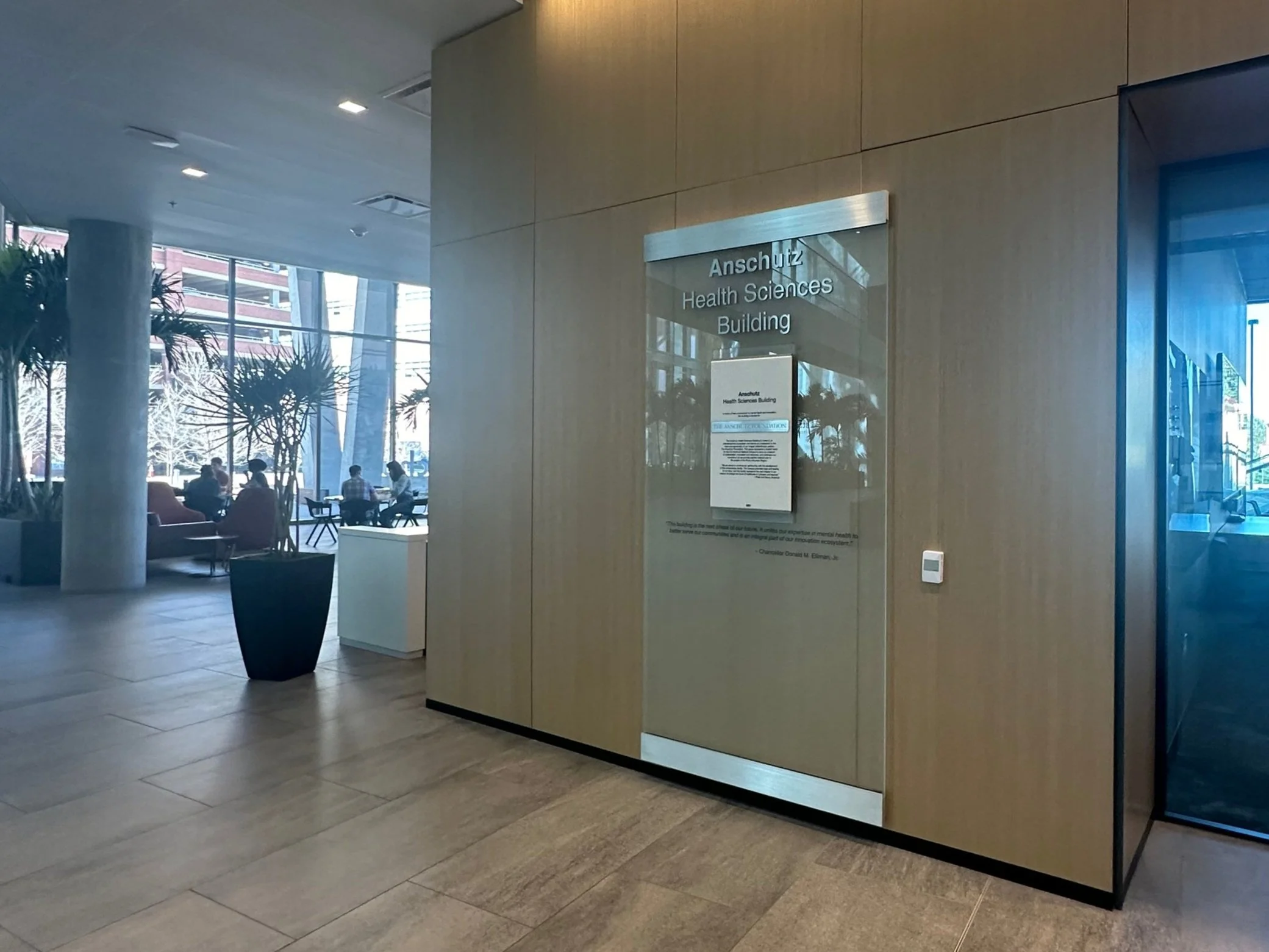
The design standards for interior destination graphics is tightly regulated: a glass back panel, a white plaque with black lettering, specific types of imagery, and dimensional letters placed on the back panel, not the surrounding wall.
Lettering on buildings or signage to name buildings and are designed and implemented by the Campus Architect. Examples of exterior destination graphics, should they occur, must be approved by the Campus Architect. To date, only a handful of examples have been implemented. -
The central advancement team at CU Anschutz builds and maintains an archive of recognition that includes profiles of all benefactor plaques, details on the plaques and their locations, and additonal stories of impact, including content about the holder of each endowed chair. The archive is publicly available online and can be toured at cuanschutzrecognition.org.
-
![Detail of plaques in the Research display]()
Plaques within the large displays are grouped by the type of research funded
-
![View of the Endowed Chair recognition display]()
CU Anschutz has inspired donors to fund named faculty positions, known as Endowed Chairs
-
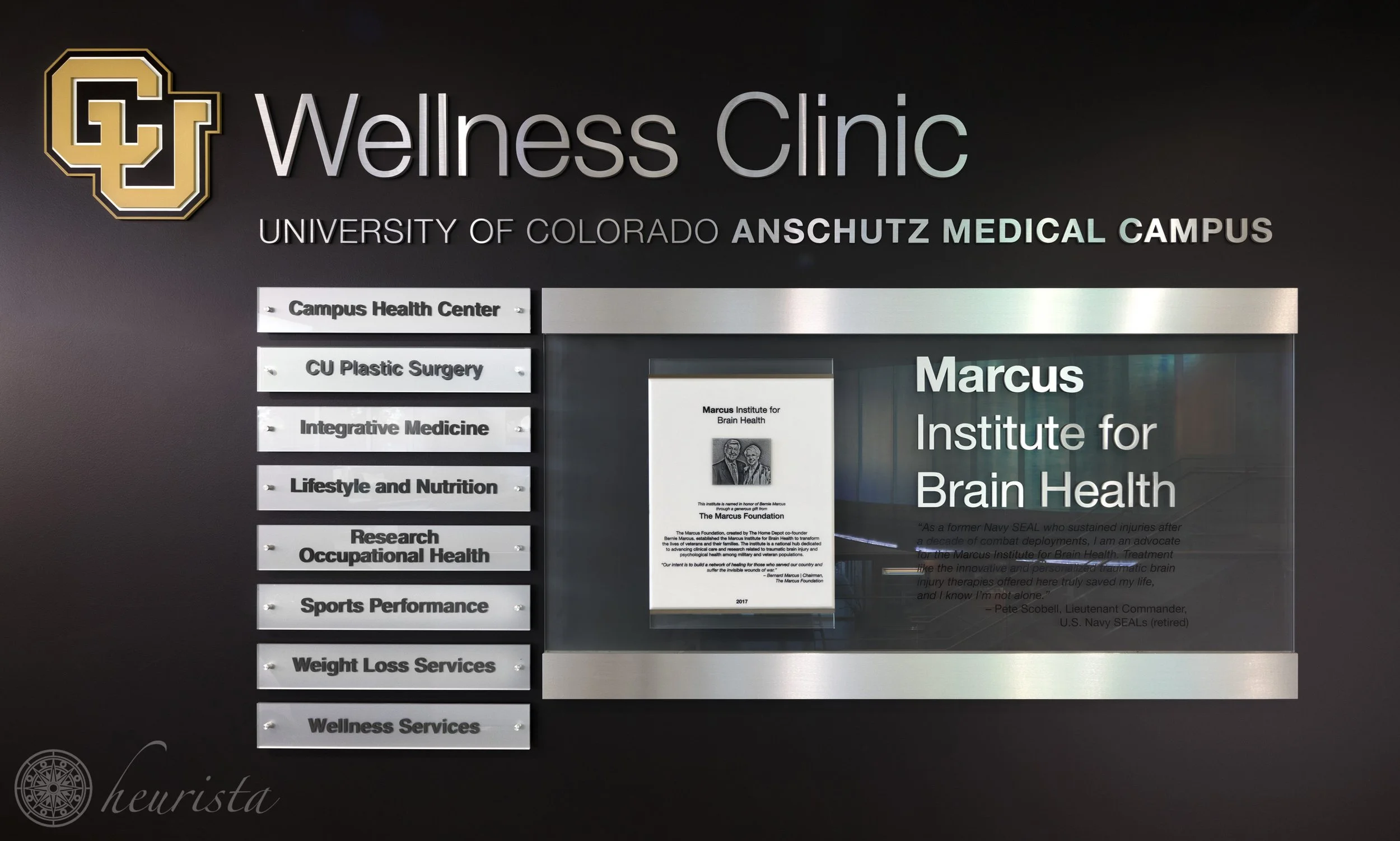
![Signage naing the Marcus Institute for Brain Health]()
Signage celebrates donor support and shares information about the donors and their motivation for giving
-
![One of two displays recognizing giving to academics and student support]()
The grouping of recognition positions each gift within the larger impact of giving to CUAnschutz
-
![View of multiple walls of the Research donor recognition display]()
The recognition system allows for reorganization of plaques as new gifts are received
-
![View of the Endowed Chair recognition within the atrium]()
Recognition can inspire benefactors to support research, education and patient care at CUAnschutz
-
![Larger view of the storytelling mechanism in the atrium]()
Recognition is partnered with “big vision” storytelling of the accoplishments made possible by philanthropy
-
![Example of the permanent signage naming a primary destination]()
Across the CUAnschutz campus, benefactor generosity is showcased with uniform signage
-
![Benefactor recognition signage seen on multiple floors]()
Recognition standards allow for adaptation to differing architectural requirements
-
![Digital recognition is used to share the larger story of a benefactor's support.]()
An archive of benefactor recognition is available online at cuanschutzrecognition.org

“We chose Heurista because we wanted a consultative partner to work with us in developing our approach. We were confident putting you in front of the Chancellor and the deans.”
— Brie Aguila, Assistant Vice President for External Relations