Clemson University

Clemson is a dynamic institution known for its traditions, innovation, sustainable growth, and willingness to be inclusive and forward-thinking. Over the last two decades, Heurista has had the privilege to work with many teams at Clemson to achieve a comprehensive donor recognition strategy backed by policies and procedures designed to bring multiple stakeholders to the recognition process. Students, faculty, historians, the campus architectural team and university advancement all play interconnected roles in building a campus that is welcoming and representative of the myriad aspects of the university and the community that participates in and supports it.
Outcomes
-
Over a three year period, Heurista worked the the central advancement team to create a metrics system for monitoring donor relations activity from the perspective of outgoing communications and engagement activities, donor response, and changes in donor giving behavior. This system mirrors the metrics system used by the gift officers and allows the donor relations team to operationalize, monitor and iterate successful donor engagement strategies.
-
Clemson University is proud of the wide variety of architecture on their campuses and opts to employ donor recognition standards that allow for unique designs for each facility and project. First in 2006 and again in 2016, Heurista was asked to develop design guidelines that allow outside vendors to maintain the size and content hierarchy that aligns with gift amounts while exercising design freedom. This approach also establishes target spending for donor recognition and establishes a strict review and approval process so the campus architect and donor relations team can share responsibility for product outcomes.
-
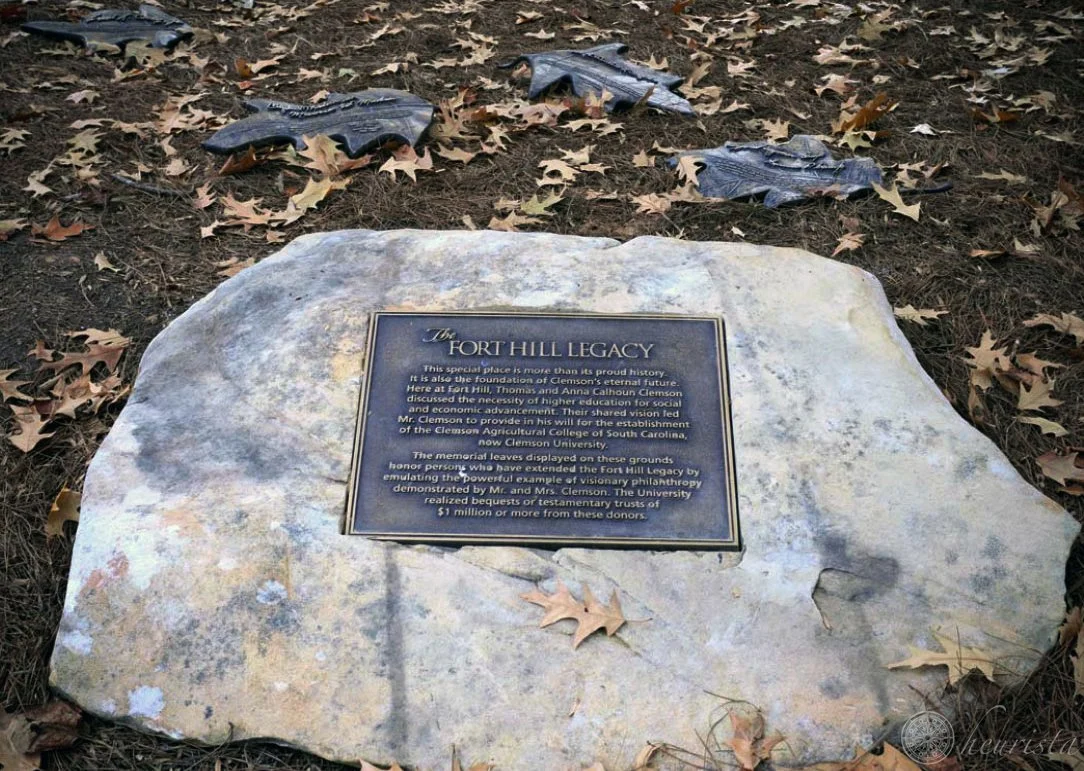
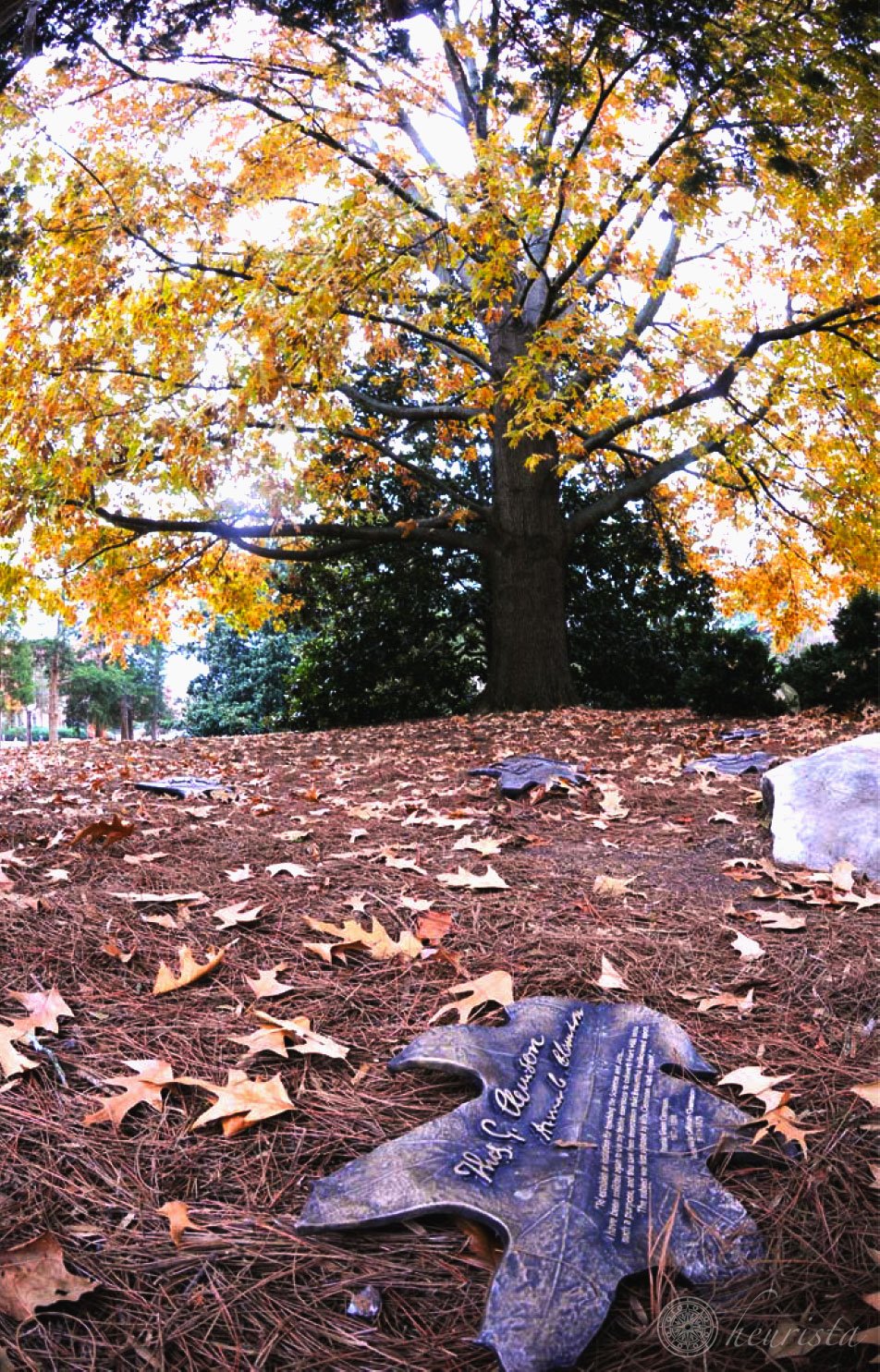
Fort Hill is cherished as the site where Thomas Clemson signed his will, donating the land that would become Clemson University. Building on that tradition, donors making planned gifts sign the Fort Hill Legacy Society register. If a gift matures at $1,000,000 or more, the donors are permanently recognized with a bronze leaf beneath the Second Century Oak.
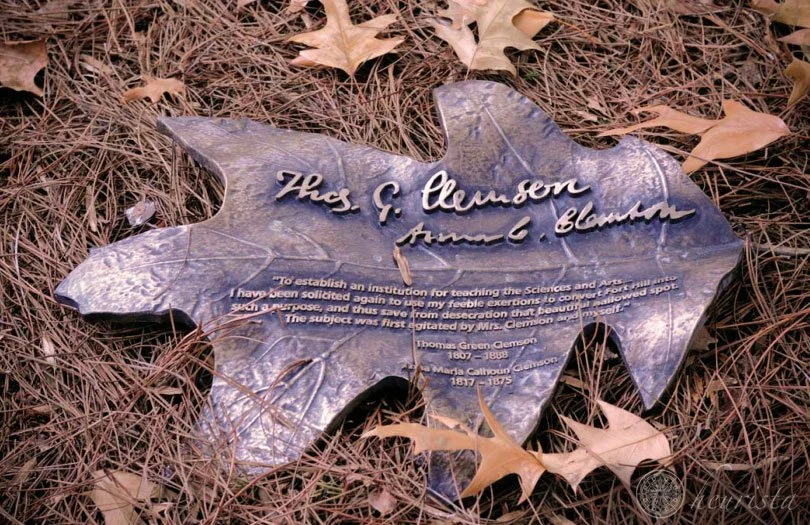
Design of this project engaged the campus landscape architect and historian, and recent academic research confirmed that Anna Calhoun Clemson should be listed alongside her husband. In keeping with this level of historical accuracy, leaves from the historic
oak were scanned, the donor signature and copy were added to the electronic model, and the digitally sculpted forms were cast using the traditional lost wax method. Each leaf was then hand-finished and permanently installed on campus. The files for perpetuation of the project are digitally stored in the campus archives. At the dedication ceremony, families of the donors, faculty, students and staff gathered to sing the alma mater. Moving presentations were made by individuals standing behind each bronze leaf, each beginning, “I am Clemson,” and telling the story of the donor and how his or her contribution has enhanced the speaker’s experience at Clemson. This level of historical accuracy, complex storytelling and long-range planning is appropriate to the level of importance that Clemson places on the donors who provide this type of philanthropic support. -
Donor recognition planning began well before The Wilbur O. and Ann Powers College of Business broke ground in Fall 2017. Knowing that the building would herald a new era in campus development, the advancement team engaged Heurista to assess the entire donor recognition program, starting with naming opportunity policy, a consistent valuation system, and a tracking system coordinated through advancement services. With the endorsement of the president’s naming committee, campus planning, and the fundraisers, the entire strategy was revamped to clarify the design standards and greatly enhance the storytelling potential for all donor recognition.
The design phase was a coordinated effort between Heurista, campus planning, and the project architects. The resulting designs support the major themes of this project and maintain size, cost and content guidelines that apply to all Clemson University donor recognition moving forward.
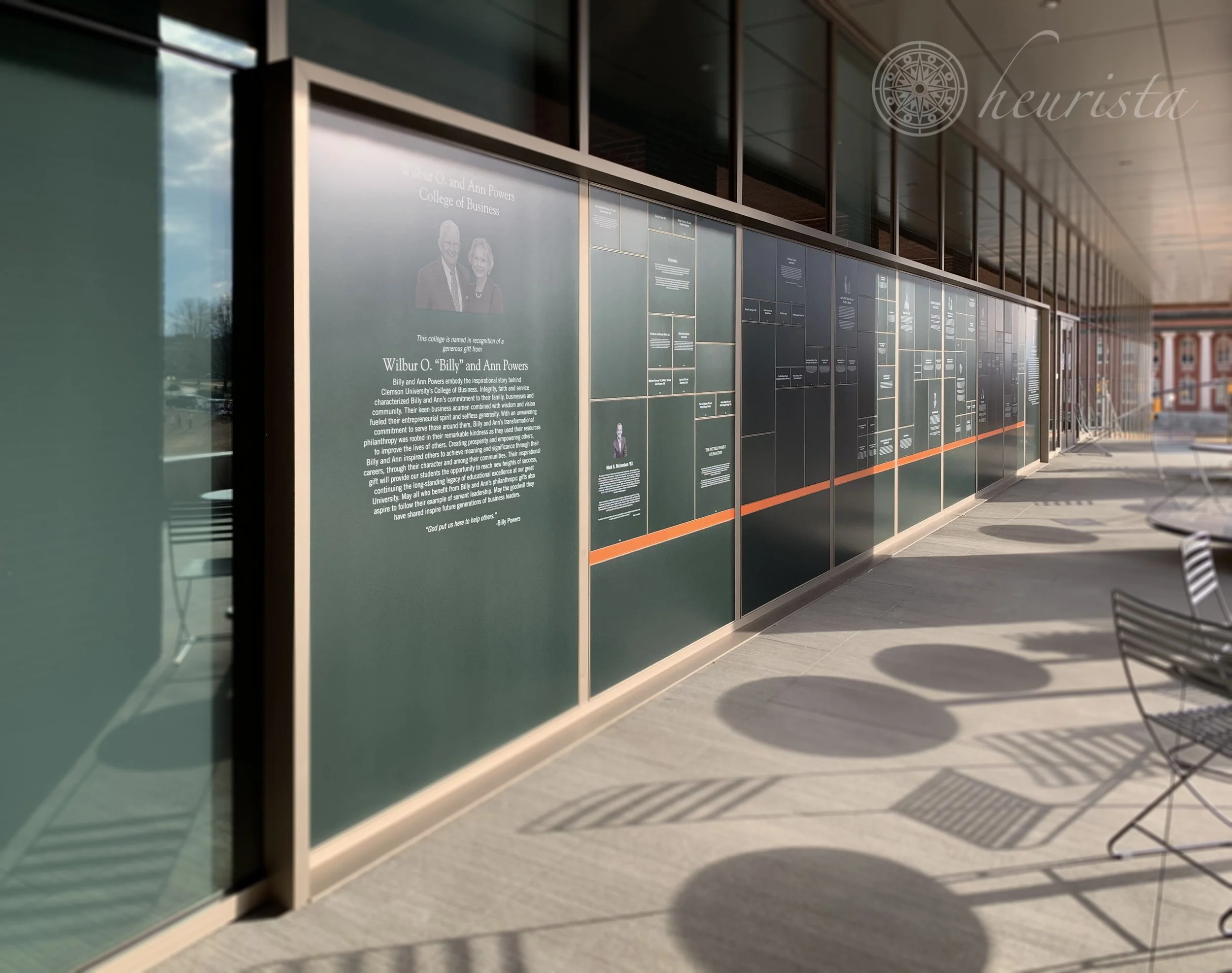
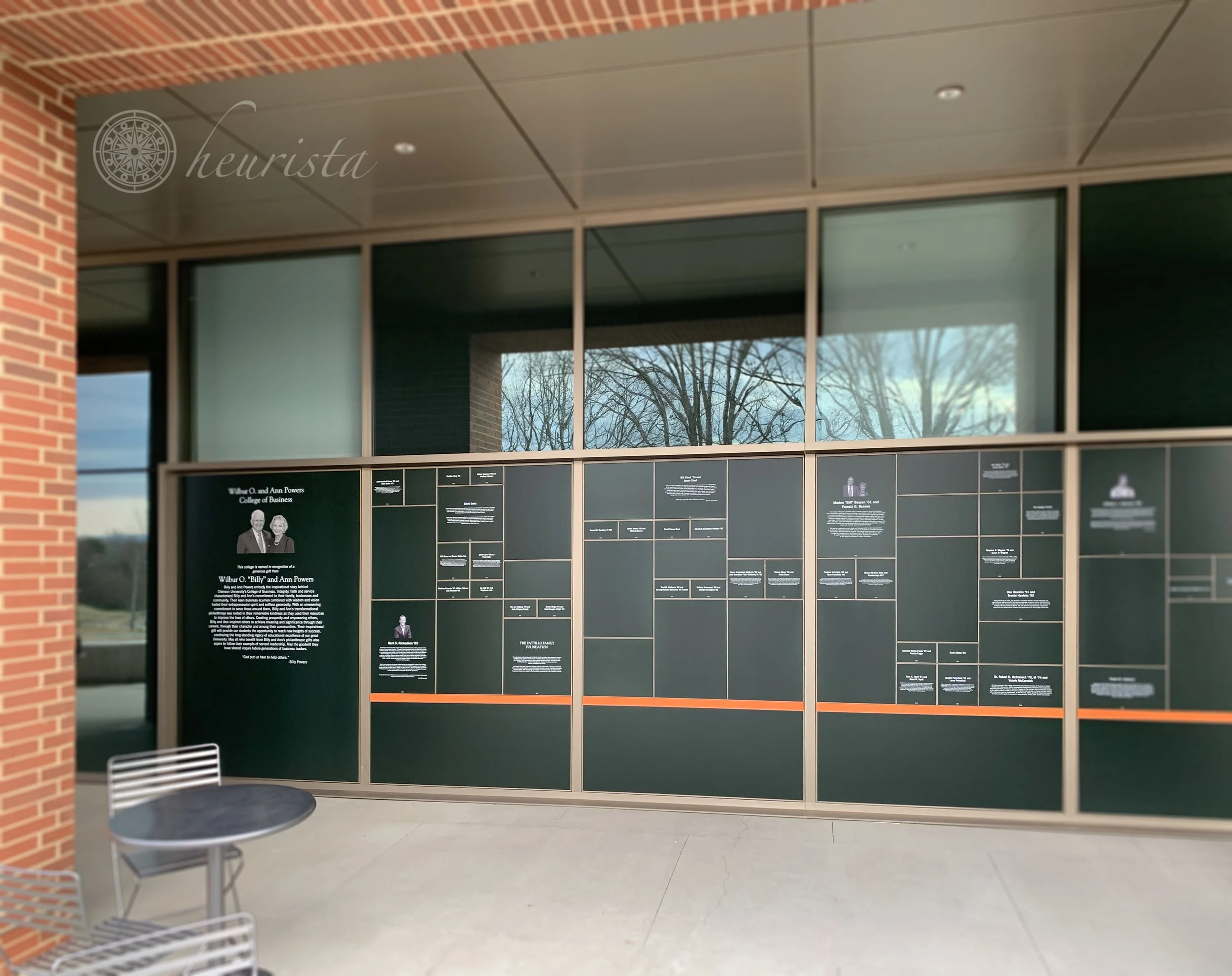
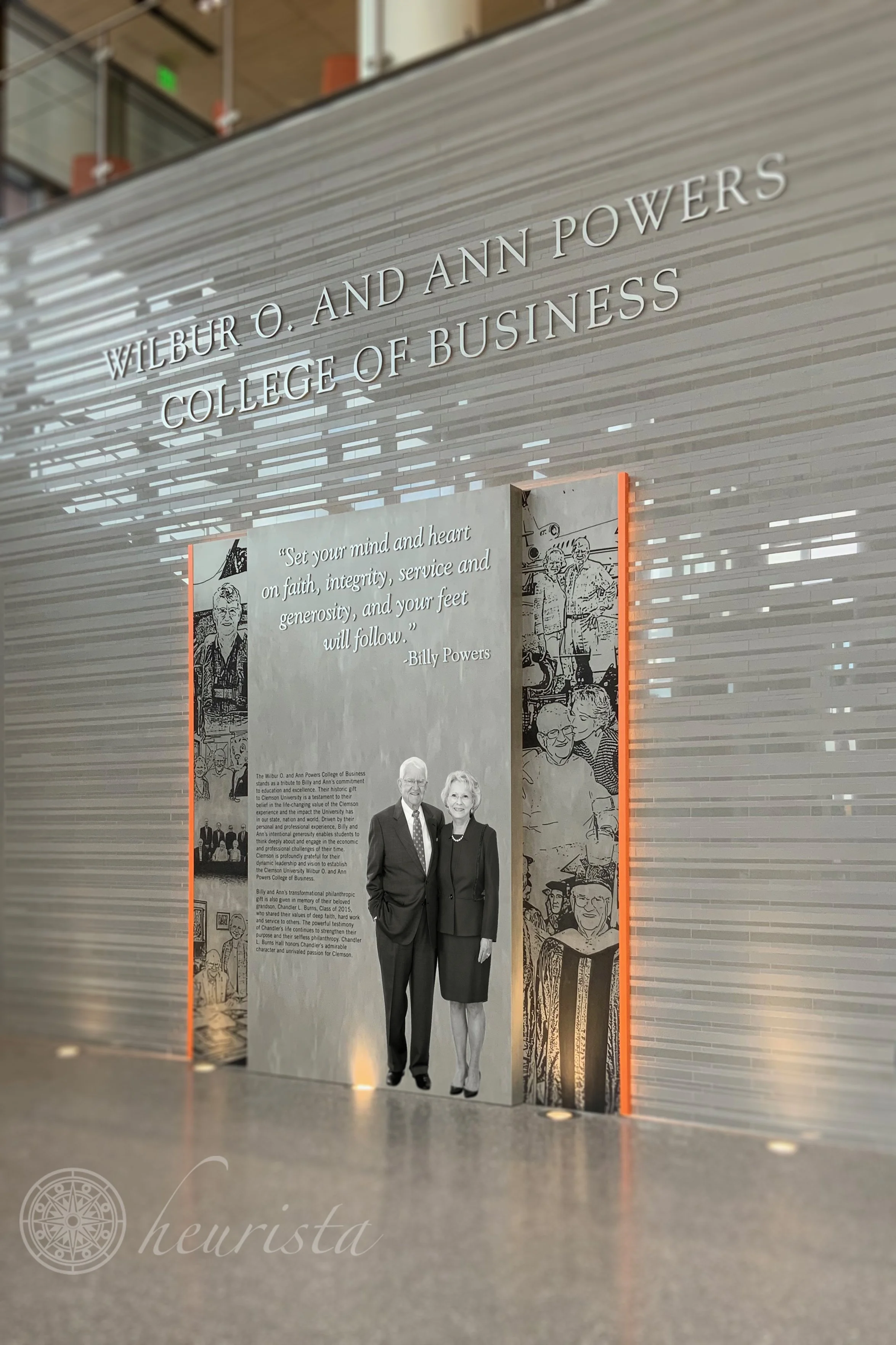
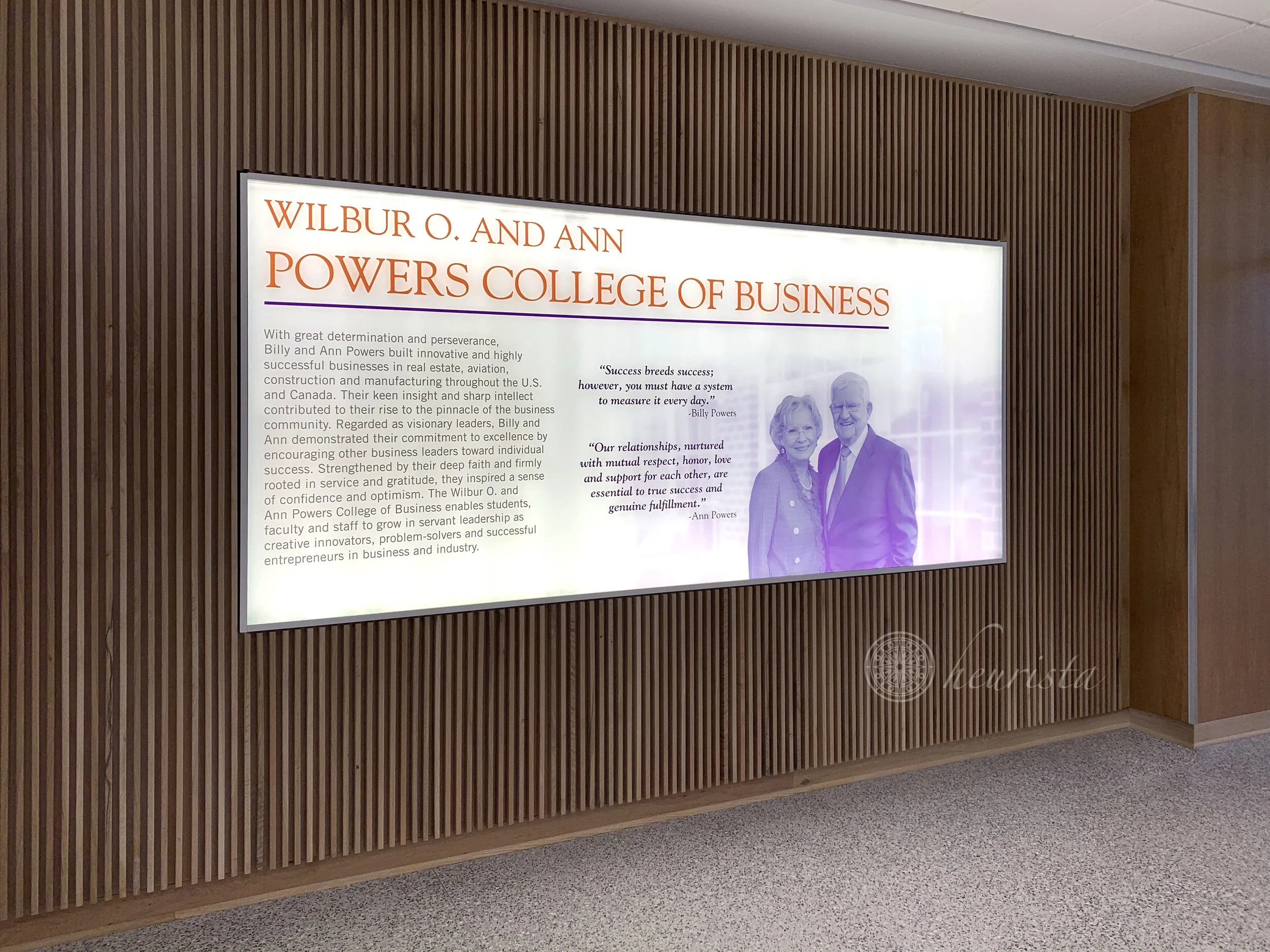
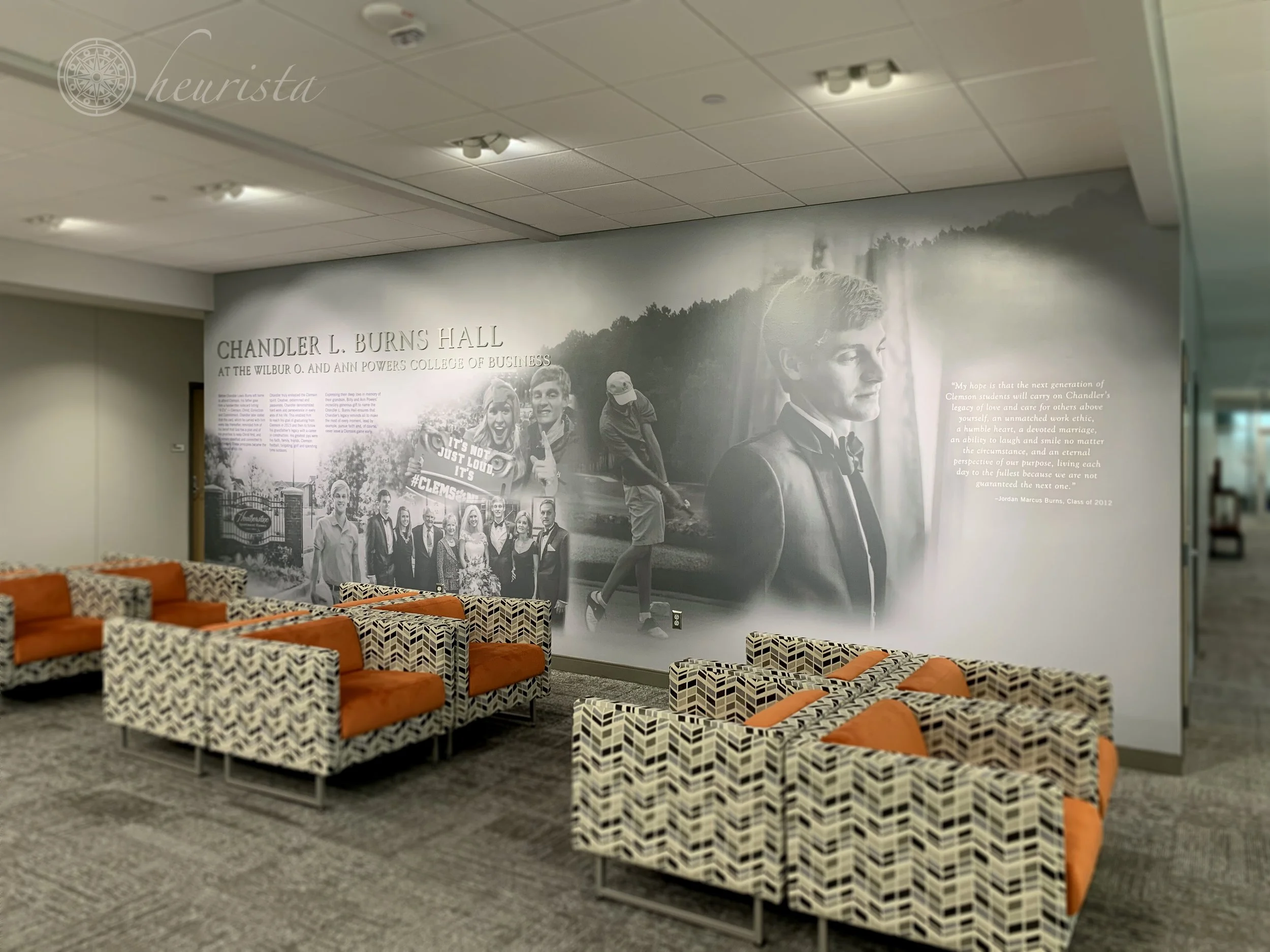
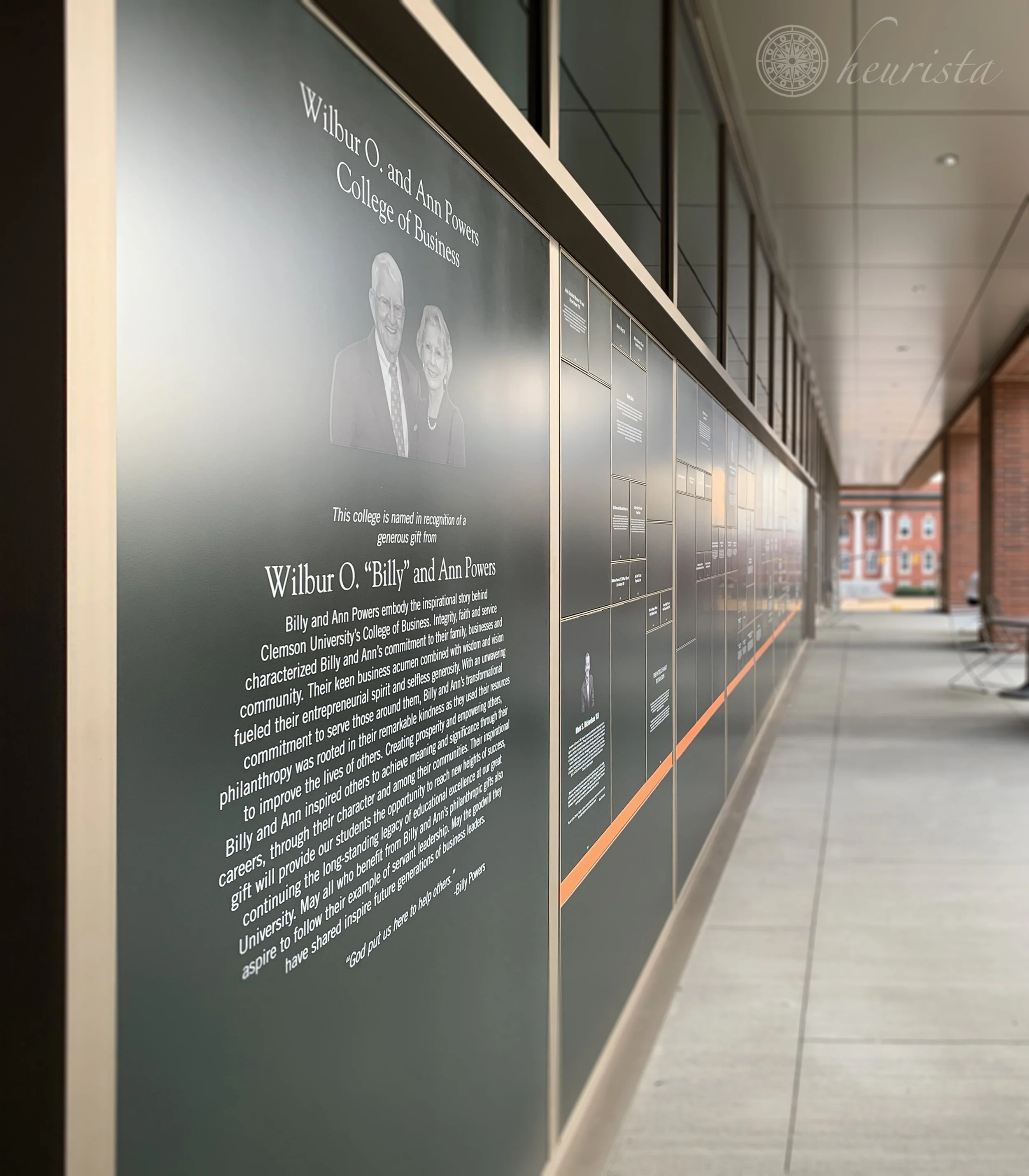
The new facility opened in 2020, showcasing the Powers family and their significant philanthropic support. Recognition displays include the outdoor Benefactors’ View, a grouped recognition unit integrated into the glass facade of the building. This display recognizes major gifts made in support of the construction of the building as well as named funds, programs, and faculty positions. In the main lobby, the Powers are featured with story-telling celebrating their personal history and connection to Clemson University, and a collage of their accomplishments and contributions to Clemson. The Powers named the south hall in honor of their grandson, Chandler L. Burns, whose life is commemorated in the career center. Throughout the building, naming opportunities showcase the many donors who supported the project, several dedicating their gifts to beloved faculty.
-
Recognition at the CU-ICAR facility heralded the collaborative approach to donor recognition implementation at Clemson. Under the supervision of the campus architect, a donor recognition company was hired by central advancement to design, fabricate and install the recognition products. The designs were informed by the size and content hierarchies established by university policy. The plaques and displays showcase the branded features of the facility while sharing information about the donors that give the sign program meaning to all audiences. The project featured naming opportunities, a philanthropic communication wall in the main lobby and sponsor recognition in primary research and collaboration areas.
-
![An image of a grouped donor recognition display at Clemson University.]()
Donor recognition at the Powers College of Business is located outdoors, facing the historic green.
-
![An image of a bronze plaque affixed to a rock that reads "The Fort Hill Legacy" at Clemson University.]()
The Fort Hill Legacy Society recognized planned gifts realized at a value of $1 million or more.
-
![An image of bronze leaves on pine straw with text recognizing donors to Clemson University.]()
Fort Hill is where Thomas Clemson signed his will granting the land that would become Clemson University
-
![An image of a bronze leaf on pine straw with text recognizing donors to Clemson University.]()
Each bronze leaf includes the donor’s signature and a quote by or about the donor.
-
![An image of a grouped donor recognition display at Clemson University.]()
Clemson uses a sign heirarchy that directs the size and content for each plaque based on gift amount
-
![An image of a display recognizing the naming of the Clemson College of Business by Wilbur O. and Ann Powers.]()
Storytelling is of key importance in Clemon’s donor recognition strategy
-
![An image of a display recognizing the naming of the Clemson College of Business by Wilbur O. and Ann Powers.]()
Legacies are honored and traditions are perpetuated by Clemson’s philanthropic naming programs
-
![An image of a display featuring a collage of photographs recognizing the naming of Chandler L. Burns Hall.]()
Some donors opt to memorialize family members through their campus-based recognition